
2.1 Why Are There Two? Background to the Sect Split
Kyoto is home to two large temples, Higashi Honganji and Nishi Honganji, with similar names and locations. Both are head temples of the Jodo Shinshu sect, and both were founded by Saint Shinran. However, for historical reasons, they exist as separate sects.
🔸Originally One Honganji
The Honganji sect, founded by disciples who inherited the teachings of Saint Shinran, became a major religious force during the Muromachi period and unified as a single Honganji.
However, during the Sengoku period, Honganji also became embroiled in wars, engaging in complex political relationships, such as opposing Toyotomi Hideyoshi and fighting against Oda Nobunaga. Eventually, a succession issue arose for the 11th abbot of Honganji, Reverend Kennyo, and his son, Reverend Kyonyo, sought independence as religious leader.
🔸Reasons for the Split into East and West
Higashi Honganji was founded in 1602 when Tokugawa Ieyasu bestowed temple land on the Reverend Gyonyo and had him found the new Honganji temple. Meanwhile, the original Honganji continued to exist as Nishi Honganji.
It is said that this split was motivated by Tokugawa Ieyasu’s concern that “if one religion becomes too large, it will have political influence,” and was intended to decentralize the religious group’s power.
Thus, to this day, two head temples, “Higashi Honganji (Shinshu Otaniha)” and “Nishi Honganji (Honganjiha),” exist side by side.
🔸Highlights of Higashi Honganji Temple (Otani-ha Shinshu)
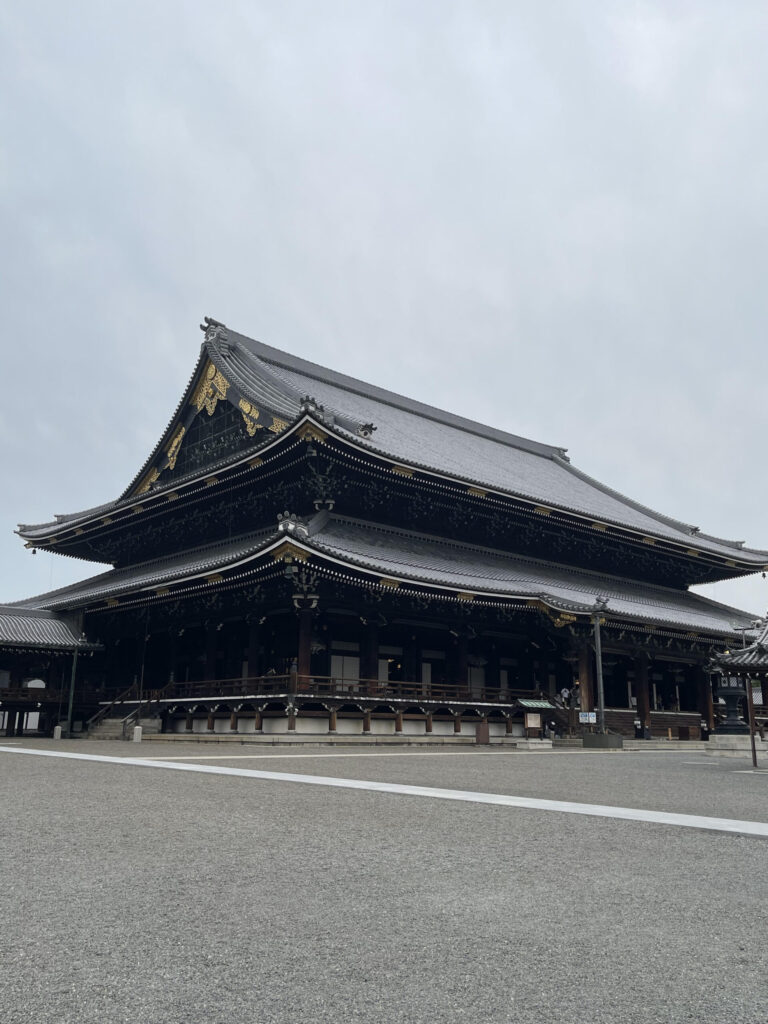
・Goeido
→ One of the largest wooden buildings in the world. Home to the portrait of Saint Shinran.
🔹Goeido
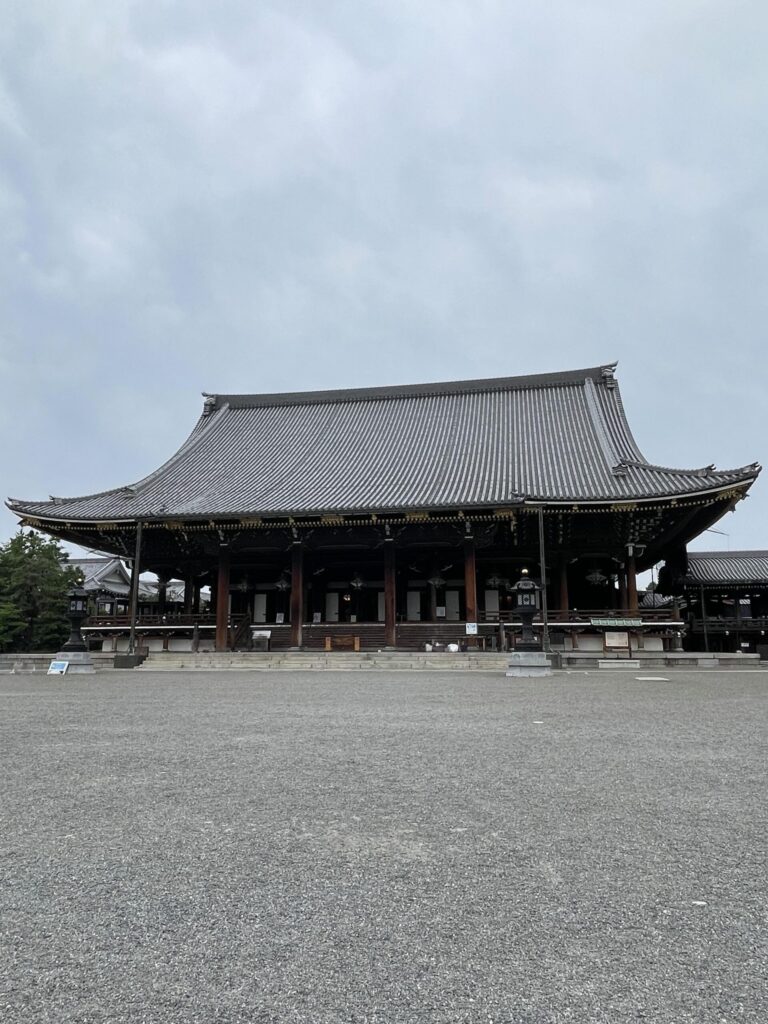
🔸Amidado
→ This hall enshrines the principal image of Amida Buddha.
🔹Amidado
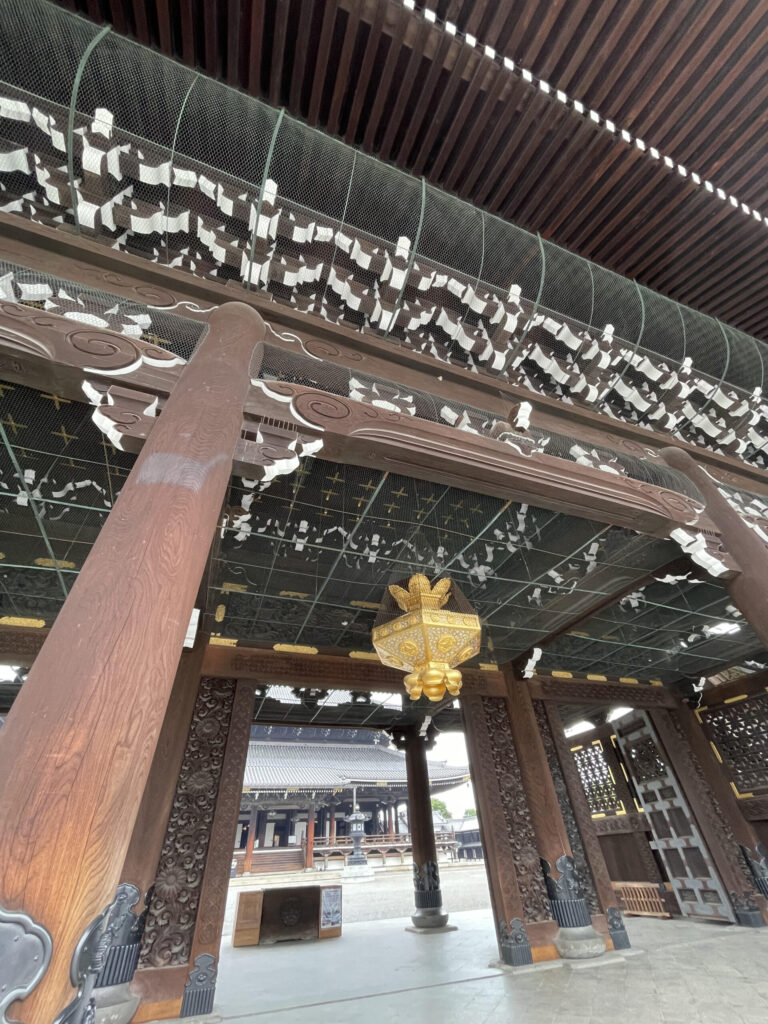
🔸Mieido Gate
→ One of the tallest gates in Kyoto.
🔹Mieido Gate
🔸Shosei-en Garden
→ A scenic garden located within the Higashi Honganji detached grounds. Enjoy the changing seasons with its strolling pond garden.
・A solemn atmosphere and tranquility
→ Relatively few visitors, allowing you to participate in the service (chanting) with a tranquil mind.
2.2 Differences in the Sights of Higashi Honganji and Nishi Honganji
Both Honganji temples have majestic and beautiful buildings and are of great historical value, but each has its own unique features and atmosphere.
🔸Sights of Nishi Honganji (Honganji sect)
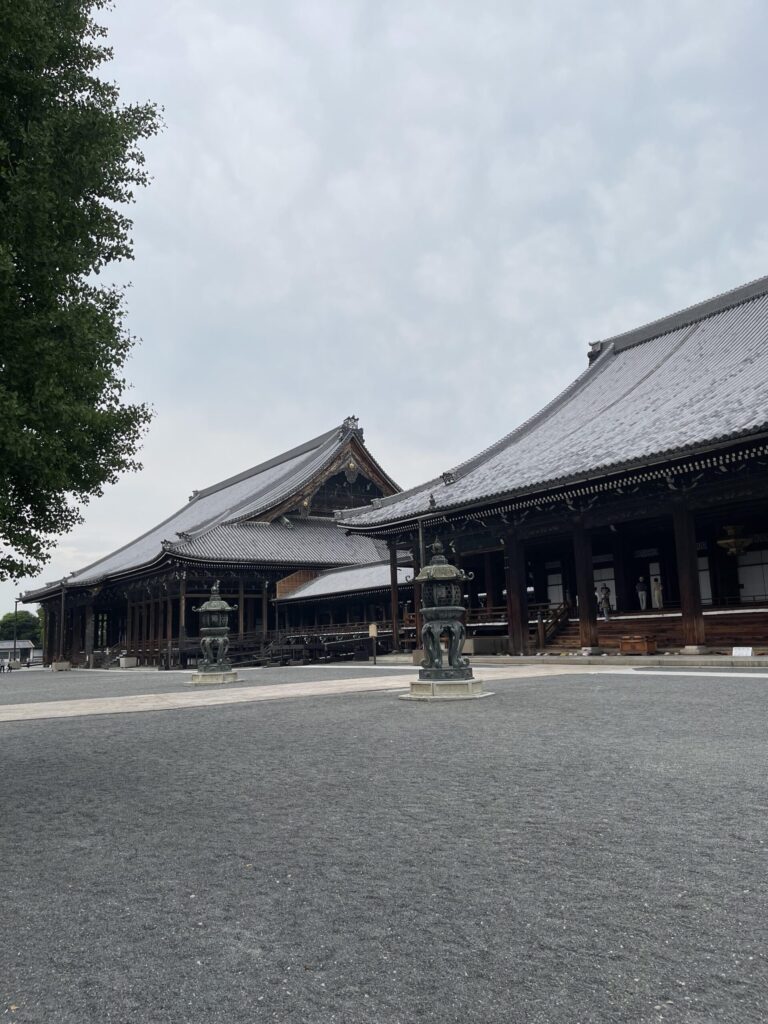
・Amida Hall and Goei-do Hall
→ Like Higashi Honganji, these are magnificent wooden structures. Designated a National Treasure.
・Karamon Gate (Karamon Gate)
→ A gorgeous National Treasure with vibrantly colored decorations.
・Hiunkaku (Hiunkaku Pavillion)
→ A renowned Momoyama-style building (not open to the public), said to be a remnant of Jurakudai.
・Shoin study and Noh stage
→ A design that evokes the splendor of samurai culture during the Edo period.
🔹 Nishi Honganji Temple’s Amida Hall and Miedo Hall
🔸Differences in Atmosphere
・Higashi Honganji: A calming atmosphere. The spacious spaces are soothing.
・Nishi Honganji: Popular with tourists, it’s a splendid site rich in cultural assets.
Both temples cherish the spirit of Saint Shinran while conveying Buddhist teachings to the modern world in their own unique ways. If possible, we recommend visiting both to experience the difference