
Higashi Honganji Temple is a majestic temple located in the heart of Kyoto, yet it is also a place of tranquility and peace of mind. Here, we will introduce some of the must-see highlights in detail.
5.1 Goei-do Hall and Amida-do Hall: Magnificent Wooden Architecture
🔸Goeido
🔹 Goeido
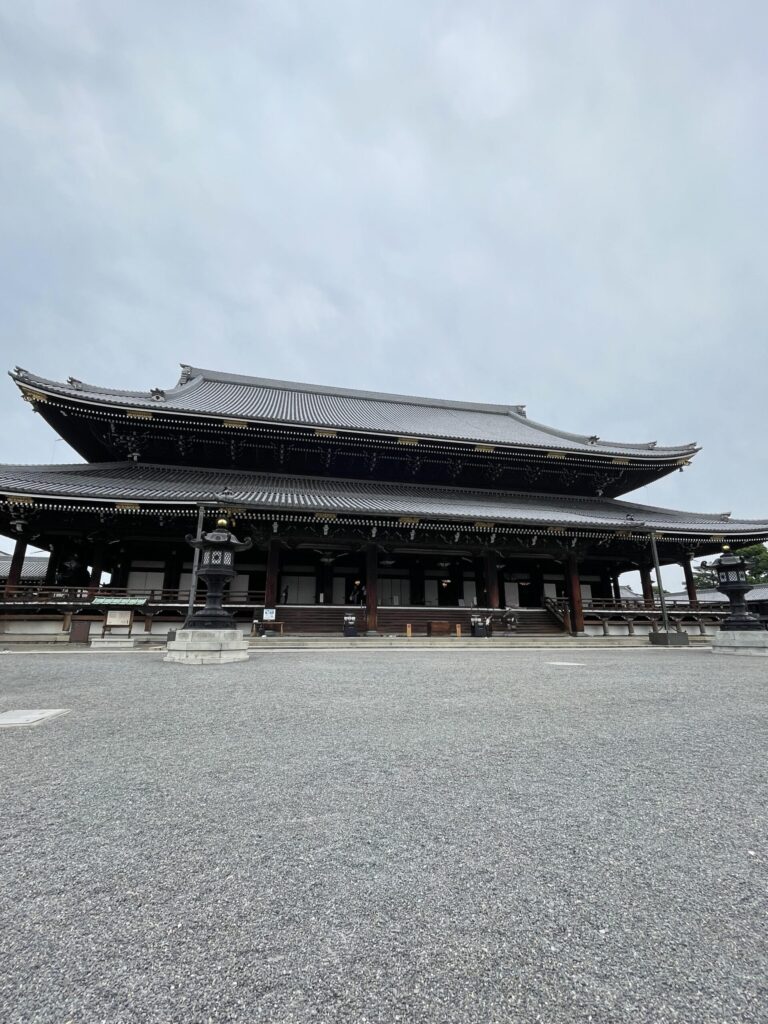
The Goei-do Hall is home to the wooden portrait of Saint Shinran, a symbol of Higashi Honganji Temple, and is known as one of the largest wooden buildings in the world.
・Completed: in 1895 (Meiji 28)
・Architectural Style: Traditional Japanese large-roof architecture
・Size: 76m wide, 58m deep, 38m high
・Special Features: Each of the pillars and beams inside is enormous, creating an impressive presence reminiscent of a “wooden cathedral.”
The spacious, tatami-floored hall features a majestic inner sanctuary adorned with gold leaf in the center, creating a tranquil atmosphere. It’s open to the public even outside of memorial services.
🔸Amidado
🔹Amidado
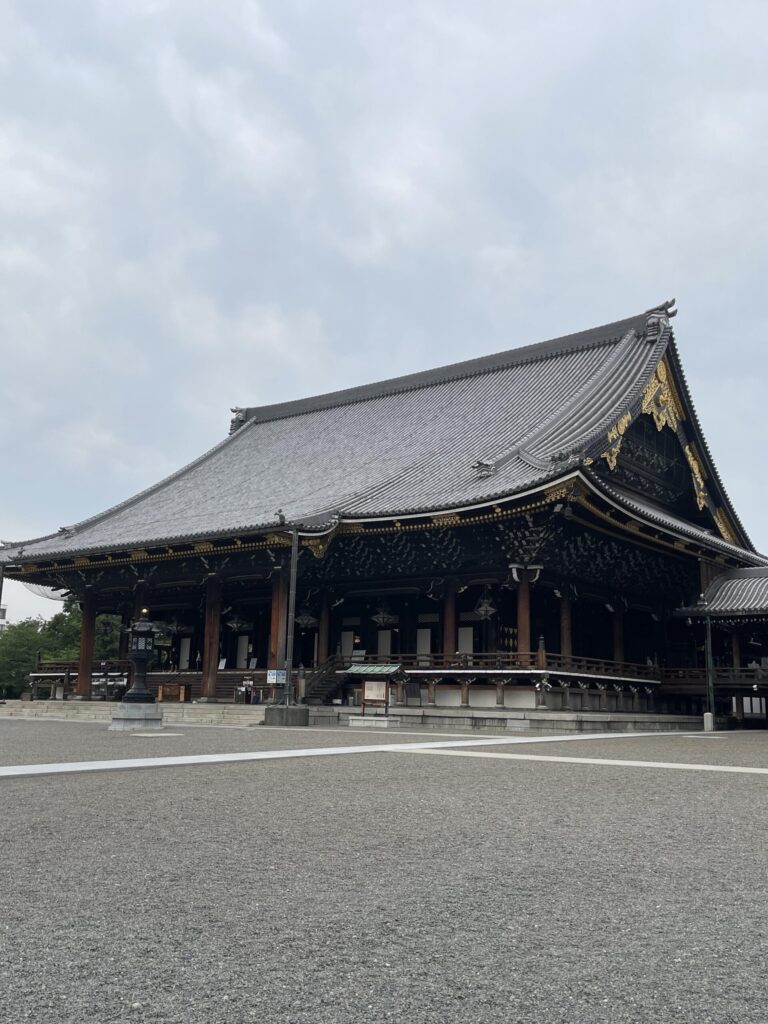
Next to the Goei-do Hall is the Amida Hall, where the principal image of the temple, the Amida Nyorai statue, is enshrined.
・Interior Features: A gold-leafed altar and a tranquil, Japanese atmosphere.
・Principal Image: You can view the Amida Buddha, the central figure of Jodo Shinshu.
5.2 Main Entrance and Goei-do Gate
🔸Main Entrance
The main entrance to the Goei-do Hall, the main entrance, has a dignified appearance and is said to have once been a place only accessible to select individuals, such as high priests and aristocrats.
・The historic structure and the pleasant scent of wood offer a real sense of the finest Japanese temple architecture.
🔸Goeido Gate
🔹 Goeido Gate
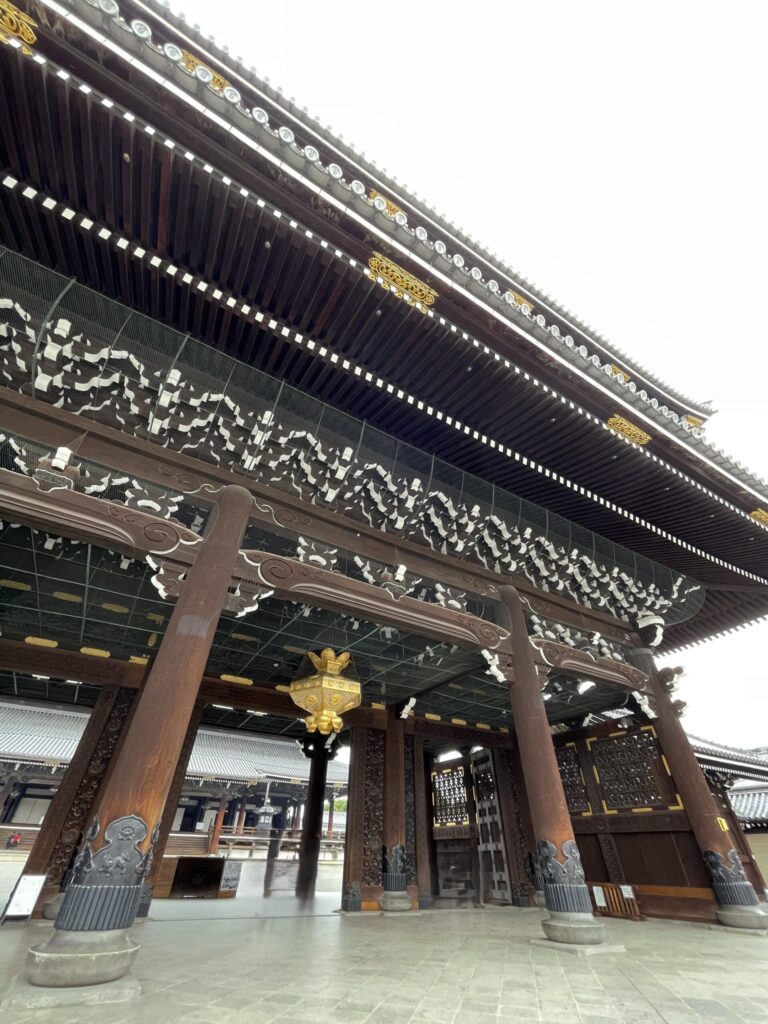
The Goei-do Gate is an imposing gate located at the main entrance of Higashi Honganji Temple and is renowned as one of the largest gates in Kyoto.
・Height: Approximately 28m
・A stately double gate with a beautiful contrast between black lacquer and gold decorations.
・Its overwhelming presence is the first thing you see when heading north from Kyoto Station!
Passing through this gate instantly sobers you up and gives you the feeling of being transported into the tranquil world of the temple.
5.3 Shosei-en Garden: The Serene Beauty of a Garden
🔸What is Shosei-en Garden?
Known as an outlying part of Higashi Honganji Temple’s grounds, Shosei-en Garden is a strolling garden with a pond created in the early Edo period. It is a tranquil space where you can enjoy the changing seasons of nature.
・Location: Approximately a 5-minute walk from Higashi Honganji Temple
・The garden’s pond, teahouse, bridges, and small islands are skillfully arranged, creating a picturesque landscape.
・Designated a Kyoto City Place of Scenic Beauty, it’s also popular as a relaxing “oasis in the city.”
🔸Must-see Spots
・Ingetsu-ike Pond: A large pond in the center. The seasonal trees reflected on the water’s surface are beautiful.
・Boukakaku: The view from the gazebo is exquisite.
・Seasonal Flowers: Each season offers its own unique charm, from cherry blossoms in spring, fresh greenery in summer, autumn leaves, and snowy winter scenery.
5.4 Morning Sutra Experience
At Higashi Honganji Temple, morning services (jinjo) are held, open to the general public. This is a traditional ritual in which monks recite sutras and offer thanks to Buddha every morning.
Start Time: Varies depending on the season, but generally around 7:00 AM
Location: Held at either the Miedo or Amida Hall
Contents:
・Listening to sutras (sitting)
・Sermons may also be included on some days
・Copying sutras and holding sermons are held irregularly
The sound of sutra chanting echoing through the silence is an exceptional moment of calming the mind. Beginners are welcome, making this a valuable opportunity to purify your soul in Kyoto early in the morning.